

About the work
Recommended age range: 6+
Attention: The performance features text in an Angolan language with Lithuanian subtitles.
“Is the voice, the body of those who stay, of those who leave, and, above all, of those who continue. It’s about bringing the personal experiences of the performers who left their country, and their families and came to Portugal to start their lives and continue their art.
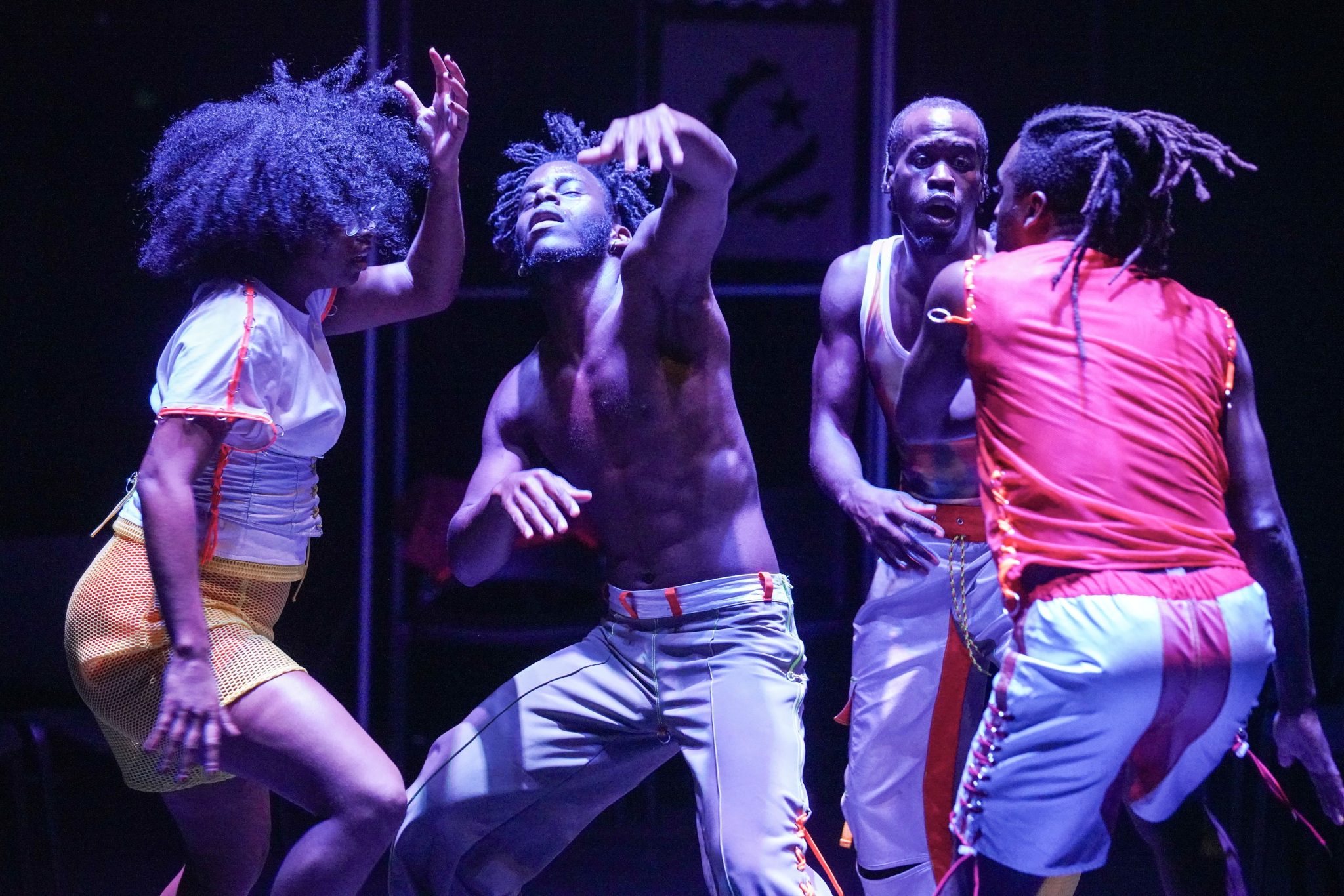
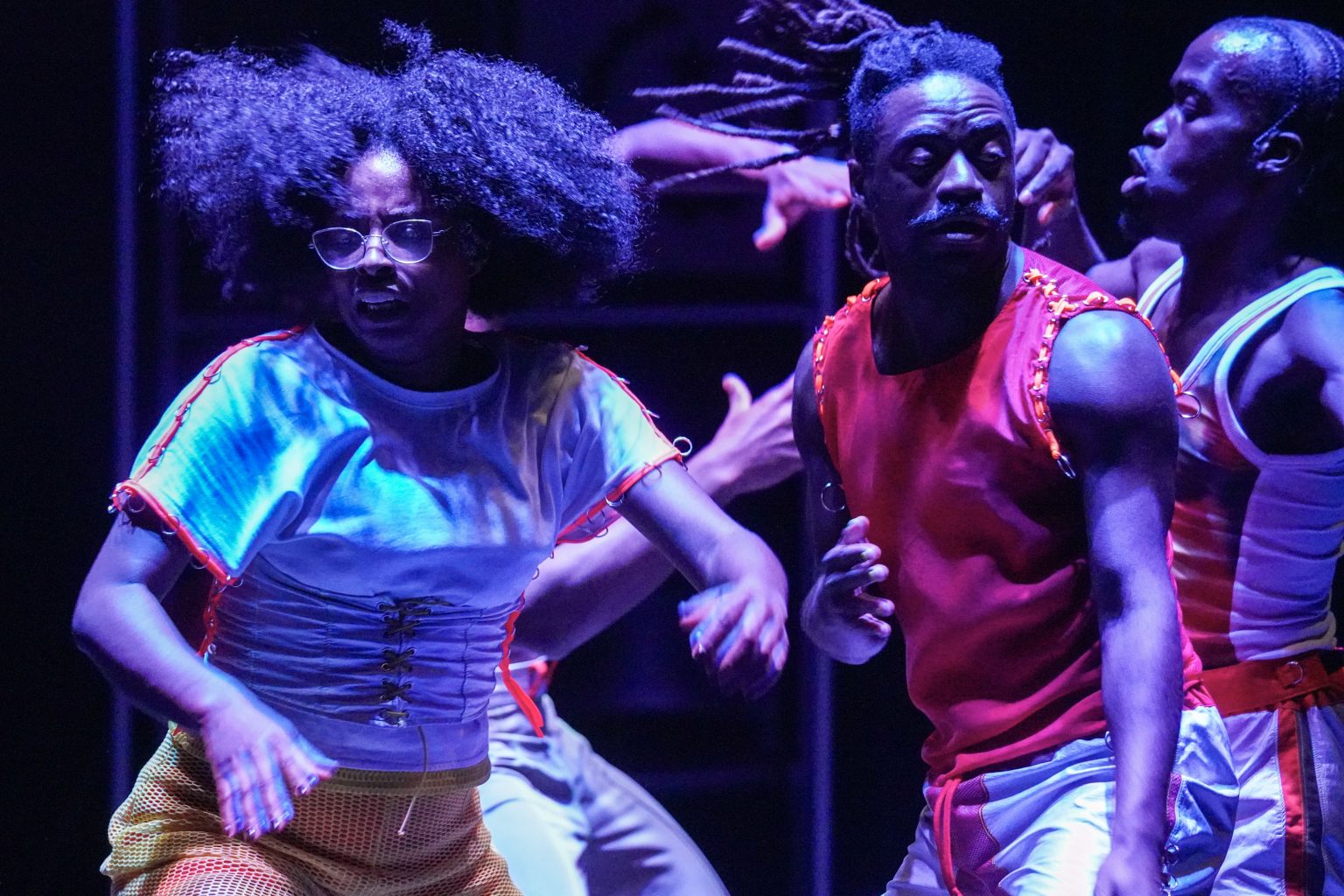
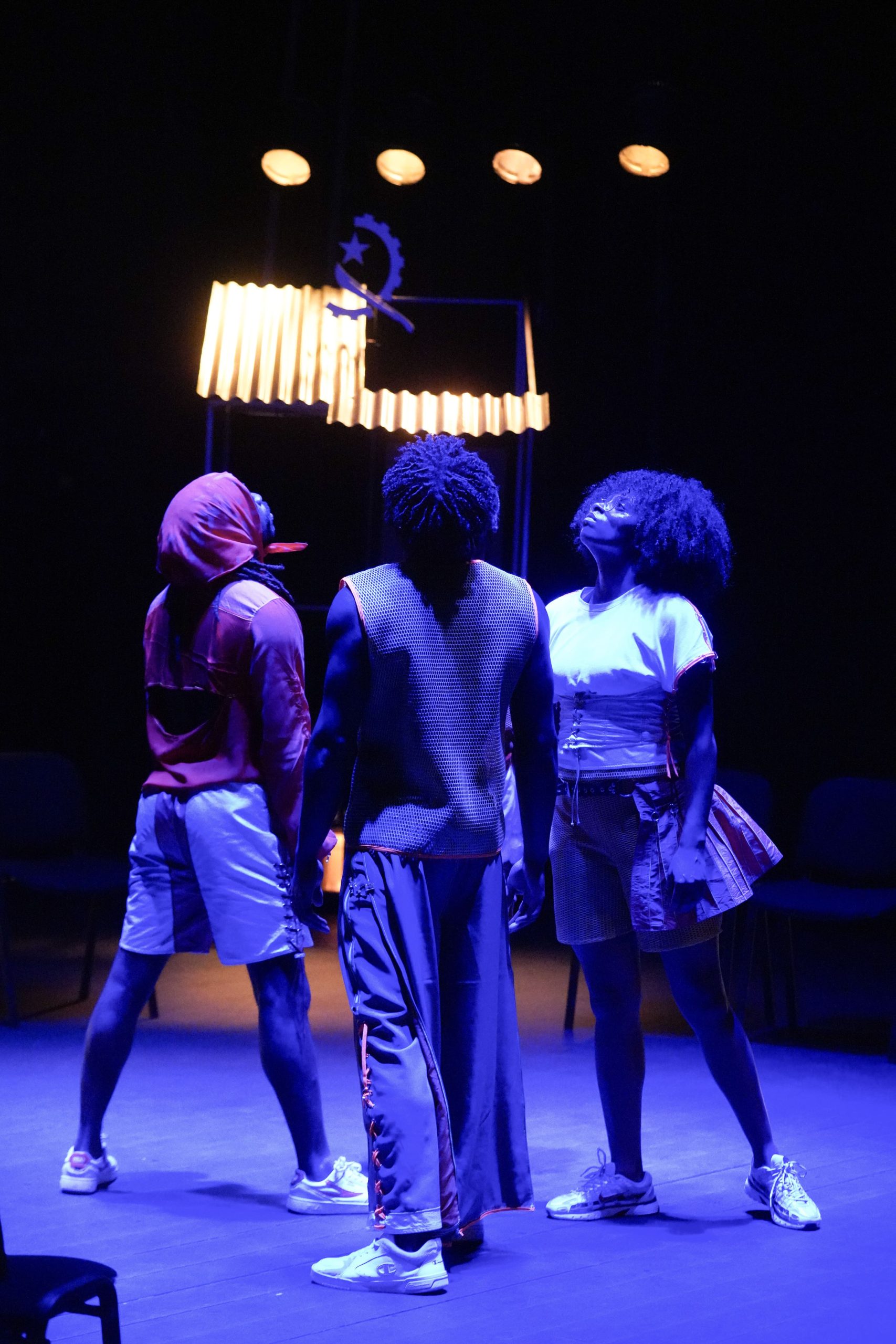
Musseque is a piece created with four dancers who share a common need for movement, dance, resistance, and pleasure that represent Kuduro. Ultimately, it’s about reducing the distance between them and their roots, culture, and family.“ – Fábio (Krayze) Januário
Musseque before being a piece for four dancers, is home, it is an encounter, it is a way of being.
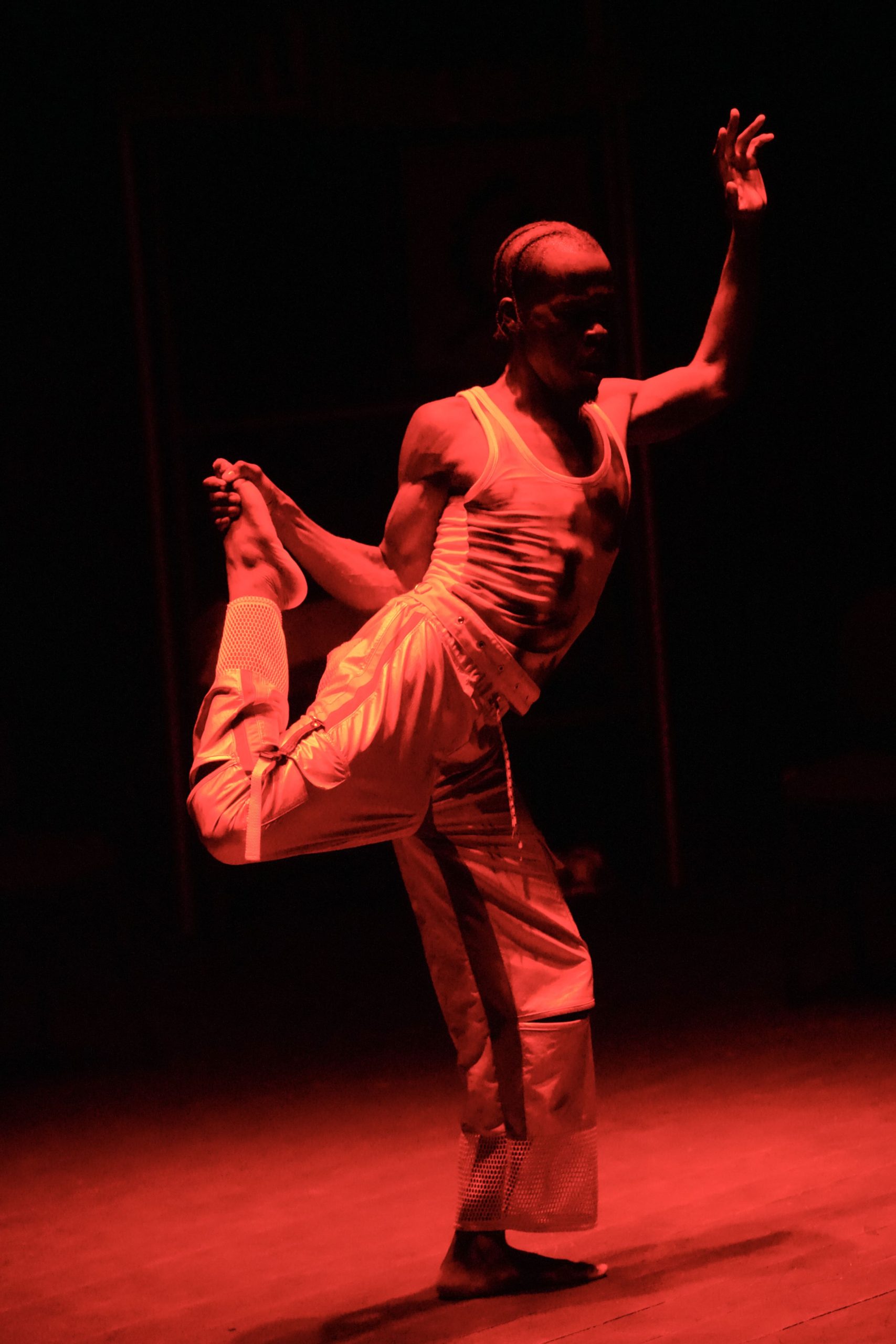
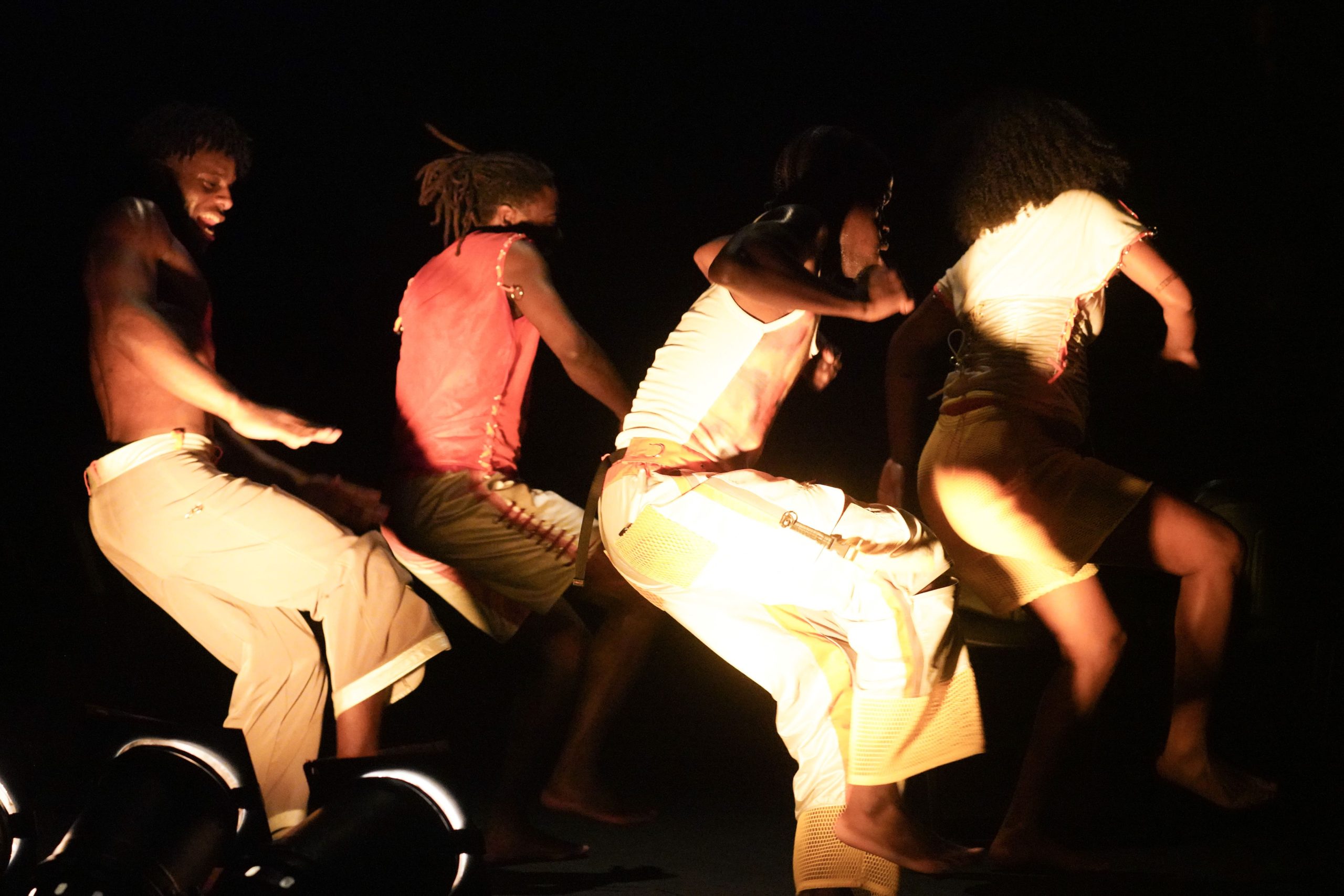
The bodies are asked for rhythm, precision, and resistance so that a piece of freedom can be found in the turbulence of war. During the Angolan Civil War, Kuduro was a style of music and dance marginalized by many but loved by the people. The four performers on stage are now being asked to continue what was lived and felt by creating a dance of the present through the experiences from the past – that are not forgotten.
On stage, the peripheries of Luanda that are home, the speeches that are revolution, and the bodies that are resistance are revisited in a hallucinating rhythm of movements that are resilient to those who continue beyond the war.
The name of this performance, Musseque, refers to the suburban neighborhoods of Luanda, Angola — areas mostly inhabited by the poorer population and where Kuduro was born. It emerged as a way to claim space and freedom during the civil war that broke out in 1975, right after Angola gained independence from Portugal, and which lasted until 2002 — the same year the creator of this piece moved to Portugal.
Kuduro started off as a music genre, with lyrics deeply connected to the social and political realities of the time. Later, it evolved into a dance style, creating its own language and rhythm rooted in that same music. It became more visible in the late ’90s and was mainly embraced by people from the outskirts of the city, rather than the urban center. Its impact was powerful because Kuduro became more than entertainment — it was a way to resist the harsh reality of war. People needed hope, an outlet, and those fast, energetic beats gave them a sense of freedom, encouraging the body to move with the music instead of being consumed by violence.
Fábio Jorge Januário was born on 18 August 1988 in Luanda, Angola. He came to Portugal in 2002 where he began his dance career. In 2015 he completed his degree in Dance at Escola Superior de Dança (Lisbon).
He developed his knowledge of urban dances in hip-hop, house, popping and locking, frequently giving Kuduro workshops and masterclasses in Portugal and abroad, such as in France, Switzerland, Slovakia, Belgium, and Hungary. He also teaches regularly at schools in the Lisbon area. As a dancer, he has worked at different festivals such as NOS Alive, Rock in Rio, MEO Sudoeste, and Sol da Caparica, and with different artists such as Buraka Som Sistema, Benjamin Prins, Piny, among others.
Since 2022, he has been a performer in Marco da Silva Ferreira’s productions “Carcaça” and “F*ucking Future”.
In 2024, Fábio premiered his first production, “Musseque”, which is currently on an international tour and was nominated in 2025 for Best Choreography by the Portuguese Society of Authors.
Premiere: 2024 m.
Photos by: Afonso Sereno, Paulo Pacheco, Garlics Collectivo, Jafuno.
Instagram: @krayze_fabio
Facebook: @Krayze
The festival “New Baltic Dance” is funded by the Lithuanian Council for Culture, the Vilnius City Municipality, the Lithuanian Culture Institute, and the EU.
Creative team
- Artistic direction and Choreography
- Fábio (Krayze) Januário
- Dancers and Cocreators
- Fábio (Krayze) Januário, Selma Mylene, Xenos Palma ir Elvis Carvalho (Grelha)
- Artistic Assistance
- Marco da Silva Ferreira ir Piny
- Sound Design
- DJ Poco
- Sound Operation
- Miguel Pereira
- Light design and operation
- Pedro Guimarães
- Set Design
- Filipe Tootill
- Costumes
- Susana Santos
- Photography and video
- Afonso Sereno
- Production
- Rita Pessoa
- Partners
- Festivalis „Ou.kupa“
- Support and Production
- „Pensamento Avulso“
- Co-production
- „O Espaço do Tempo“, „Cineteatro Louletano“ ir „Centro Cultural Vila Flor“ programa „Projeto CASA“
- Artistic residencies
- „Espaço Alkantara“, „B.Leza“, „UDance“, „Teatro do Bairro Alto“, „O Espaço do Tempo“, „CineTeatro Louletano“, „Centro Cultural Vila Flor“
- Special thanks
- Mélanie Ferreira, Marco da Silva Ferreira, „Fundação GDA“, „Teatro do Bairro Alto“ ir visai „Ou.kupa“ komandai